Transit agencies across the country are taking a beating. With reduced travel demand and an unwarranted, media fueled panic over the dangers of transit, American transit agencies are barely getting by.
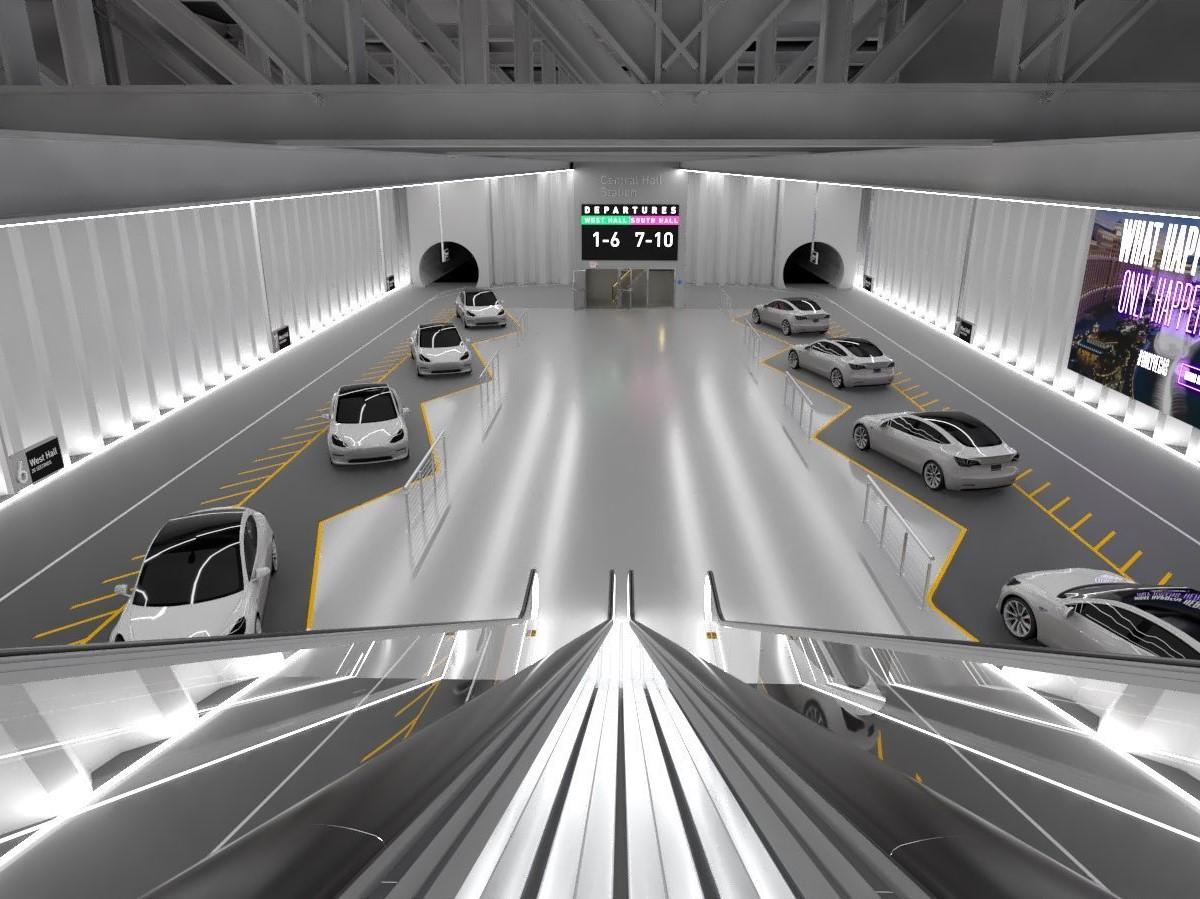
A seemingly attractive solution to this conundrum that has been floated is "on-demand transit". In San Jose's recent bid for an Airport/Diridon/Stevens Creek connector- one of many long delayed Measure A promises- , nearly all of the proposed projects had some sort of on-demand feature. So what is on-demand transit? It usually has the following features:
- Low passenger volume (Usually 2-10 passengers per vehicle).
- Non-stop service between destinations. However, if the passengers in the vehicle have different destinations, then one or two stops may be added. But the vehicle will never stop at every stop.
- Vehicles idle at stations until a passenger boards.
- Vehicles are autonomous, self driving.
On top of that, companies such as Elon Musk's Boring Company claims it can significantly reduce the costs of underground transit projects by reducing tunnel diameter (trains need a lot more space than the modified Teslas Musk hopes to run), pre-casting construction materials and other construction techniques.
All well and good... sort of. It is important to remember that an individual waiting at one of these hypothetical on-demand transit stations is not going to want to share a car with somebody who's not a member of their party, leading to very low vehicle occupancy. If there's very low vehicle occupancy and door-to-door service, then these on-demand transit lines will be nothing more than highways; clogged with very-low-occupancy vehicles in a hellish new form of traffic.
This isn't to say that modern technology has no place in transit. Autonomous vehicles can significantly cut down on operating costs, and new tunnel cost reductions are certainly viable. Replacing trains with autonomous buses- yes, they do exist- can significantly reduce tunnel and operating costs (no tracks, power lines, smaller diameter, etc) while maintaining similar passenger volume levels as light rail. Daily ridership on Boston's Silver Line, an underground Bus-Rapid-Transit system, far exceeds the VTA light rail system as a whole. The ability to run high volumes of buses through the system more than compensates for the lower capacity of buses compared to light rail.
And while transit critics may argue that transit is no longer safe or attractive due to the pandemic, remember that even the Spanish flu of 1918 did not deter transit, and that transit is still not linked to major spreading events despite rebounds in ridership in major cities.
To sum up, on-demand transit does have some good ideas. It's focus on smaller vehicles (in our case, buses instead of trains) and automation can certainly make transit expansion and operation more cost effective. But to think that low-capacity vehicles choking underground highways- as Elon Musk fantasizes- will do anything more and increase congestion and sprawl is downright foolish.
Thanks for reading! I'll post again in a couple of days about what it means to defund the police, and from there I'll unveil my design for a new San Jose flag. I've got some thoughts on gentrification, freedom-of-speech, and state surveillance which I'll be writing about later. Be sure to follow me on Twitter at @personopolis.
Signing off,
AG
Comments
Post a Comment